


Mobility & Transportation
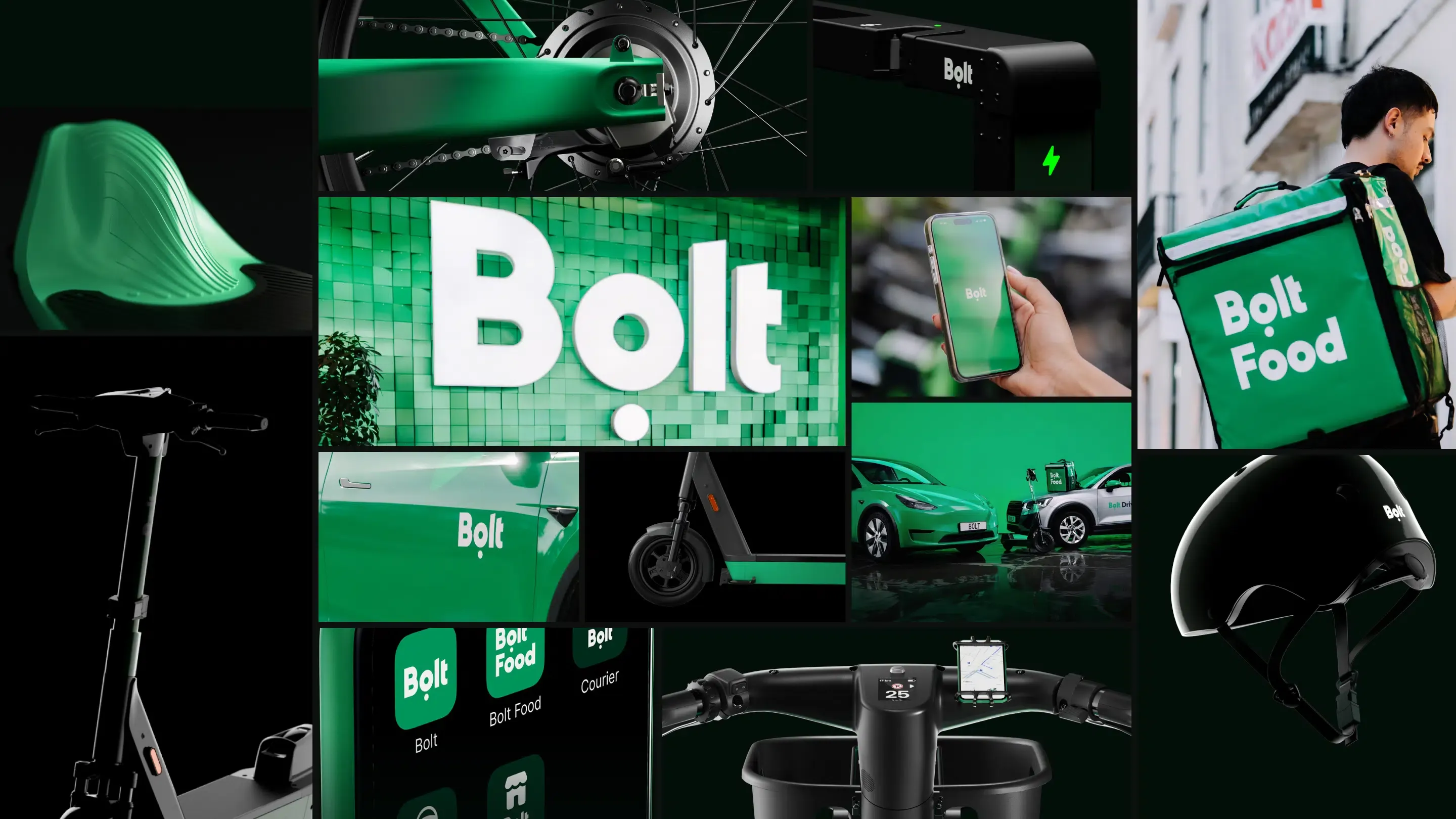
Bolt is a Tallinn-headquartered mobility and delivery platform founded in 2013 by Markus Villig and Martin Villig. Operating across more than 850 cities in over 50 countries throughout Europe, Africa, Asia, and Latin America, Bolt combines ride-hailing, e-scooter and e-bike rentals, Bolt Drive car-sharing, Bolt Food restaurant delivery, and Bolt Market 15-minute grocery delivery in a single app.
 Markus VilligFounder and CEO
 Martin VilligCo-Founder
 Oliver LeisaluCo-Founder and CTO

Markus Villig founded Bolt (originally Taxify) in Tallinn in 2013 at age 19 using a €5,000 loan from his parents, recruiting drivers in person while his brother Martin Villig and co-founder Oliver Leisalu helped build operations and engineering. Today Bolt is Europe's largest homegrown rival to Uber, serving more than 200 million lifetime customers and 4.5 million driver and courier partners across over 50 countries and 850 cities. In 2025, Bolt increased revenue to €2.27 billion (up from €1.99 billion in 2024) and recorded its first annual net profit of €0.9 million on €19.5 million in operating income as it prepares for a public listing.
"At present, we are focusing on preparatory steps that will ensure we are ready for a stock market listing when market conditions are favorable." - Bolt official statement cited by ERR News.
Bolt aggregates five urban transport and delivery services inside a single consumer app: Bolt Rides (ride-hailing), micromobility rentals (250,000+ shared e-scooters and e-bikes across 25 countries), Bolt Drive (free-floating car-sharing across seven European markets), Bolt Food (restaurant delivery with 35,000+ partner restaurants), and Bolt Market (dark-store grocery delivery). Bolt operates an asset-light commission marketplace in ride-hailing and food delivery, while financing its Bolt Drive vehicle fleet through €126 million in leasing facilities with Luminor and Swedbank. Analyst estimates put Bolt's implied blended take rate at roughly 22% of gross merchandise value (up from ~14% in 2021), intentionally pricing below Uber's ~29% global blended take rate to attract drivers and riders in price-sensitive secondary European and African cities.
Instead of burning capital in saturated U.S. markets or Western European capitals early on, Bolt expanded into Eastern and Central Europe and sub-Saharan Africa (including Nigeria, South Africa, Kenya, and Ghana), where public transit was sparse and Uber had limited local operations. In 2024 and 2025, Bolt expanded into the UAE (partnering with Dubai Taxi Company to log 1 million rides in 41 days), Switzerland, Malaysia, and Denmark via the acquisition of electric taxi operator Viggo. Bolt competes globally with Uber, in food delivery with DoorDash (which owns Wolt and, since 2025, Deliveroo), in micromobility with Lime and the merged Tier-Dott, and in emerging markets with InDrive and Yango.
Bolt has raised roughly $2.2 billion (€2.0 billion+ in equity plus venture debt) across 11 rounds from 44 institutional investors. Its primary valuation peaked in January 2022 with a €628 million ($706 million) Series F at a €7.4 billion ($8.4 billion) post-money valuation co-led by Sequoia Capital and Fidelity Management, following a €600 million round in August 2021 at a €4 billion valuation. In September 2025, secondary share sales on Crowdcube priced Bolt at an implied ~€6.3 billion valuation, a 14%–15% discount to its 2022 peak. Audited annual revenue rose from €221 million in 2020 to €1.26 billion in 2022, €1.70 billion in 2023, €1.99 billion in 2024 (with €1.12 billion gross profit and +€53.1 million operating cash flow), and €2.27 billion in 2025, when the company posted €19.5 million in operating income and €0.9 million in net profit.
Bolt serves over 200 million lifetime customers and 4.5 million driver and courier partners across 50+ countries. By 2025, CEO Markus Villig reported that the platform had reached a $14 billion gross merchandise value (GMV) run rate, a $3 billion revenue run rate, and two consecutive years of positive operating cash flow.
Having achieved its first full-year GAAP net profit (€0.9 million) in 2025, Bolt is positioned to go public once European or U.S. equity markets offer favorable multiples. Management is weighing a U.S. Nasdaq listing for deeper liquidity against an Amsterdam or London listing closer to its core European user base.
 4,231+ have already joined